National Dairy FARM Program Releases Stockmanship Training Video with BQA

ARLINGTON, VA – The National Dairy FARM Program announced today the release of a stockmanship training video as part of the program’s partnership with the National Beef Quality Assurance (BQA) program.

The 27-minute video is divided into several chapters, including “Point of Balance,” “Understanding the Flight Zone” and “Utilizing Tools to Effectively Move Cattle.” Each segment contains reminder points and multiple choice questions to test viewers on the content. The video can serve as a training resource to satisfy the FARM Animal Care Version 3.0 requirement for annual employee training.

The video, directed by Dr. Robert Hagevoort of New Mexico State and the U.S. Dairy Education & Training Consortium, is available on the FARM Program website and YouTube page in both English and Spanish.

“We are more than happy to develop and provide a tool for farmers and employees that will help them better understand why cows behave the way they do, and as a result become more careful and more efficient animal caretakers,” said Hagevoort.

The FARM Program, created by NMPF in 2009, believes the dairy industry has a great story to tell when it comes to producing safe, abundant and affordable milk and dairy beef. Beef Quality Assurance is a nationally coordinated, state-implemented program that informs U.S. beef producers and consumers about common sense husbandry techniques and accepted scientific knowledge that can help raise cattle under optimum management and environmental conditions. FARM’s partnership with BQA demonstrates that U.S. milk producers are committed to providing the best in animal care, residue prevention and environmental stewardship.

For any questions regarding the stockmanship training video, please contact Beverly Hampton.

###

The National Milk Producers Federation (NMPF), based in Arlington, VA, develops and carries out policies that advance the well-being of dairy producers and the cooperatives they own. The members of NMPF’s cooperatives produce the majority of the U.S. milk supply, making NMPF the voice of dairy producers on Capitol Hill and with government agencies. For more on NMPF’s activities, visit our website at www.nmpf.org.

Bipartisan Congressional Letter Voices Support for Tackling of Canada’s Protectionist Dairy Practices

ARLINGTON, VA – Adding to the groundswell of recognition that Canada’s protectionist dairy policies are harmful to U.S. dairy exports, a bipartisan group of 68 members of the House of Representatives wrote to President Donald Trump yesterday urging him to insist that Canada comply with its dairy trade commitments, including those under the North American Free Trade Agreement (NAFTA).

At a time when questions are arising about the future of the U.S. role in NAFTA, the National Milk Producers Federation (NMPF), the U.S. Dairy Export Council (USDEC) and the International Dairy Foods Association (IDFA) said the 25-year-old pact is a critically important agreement that needs to be modernized, not withdrawn from, as they praised the congressional letter’s focus on ways to improve upon the existing NAFTA trade relationship.

The congressional letter to President Trump followed a call Tuesday between him and Canadian Prime Minister Justin Trudeau during which dairy exports were among the key topics discussed. The letter was spearheaded by Reps. Chris Collins (R-NY), Suzan DelBene (D-WA), Sean Duffy (R-WI), Ron Kind (D-WI), Elise Stefanik (R-NY) and Peter Welch (D-VT).

“We very much appreciate the bipartisan support from Members of Congress on this important issue. As the U.S. reviews the value of NAFTA, it’s essential that our trade negotiators focus on preserving dairy trade with Mexico and other key markets, while challenging barriers such as Canada’s systematic abuse of trade rules and tools,” said Jim Mulhern, president and CEO of NMPF.  He said that Canada’s new pricing policy uses a government-administered system to hurt the U.S. dairy industry, “undercutting our farmers’ exports and threatening to cause great damage to world dairy prices by dumping Canada’s surplus on the world market.”

“U.S. dairy companies and the workers they employ across rural America compete in global markets on a daily basis. They should reasonably be able to expect that others are also going to play by the rules,” said Tom Vilsack, president and CEO of USDEC. “When our trading partners hold up their end of the bargain – as we have seen Mexico do for dairy – trade benefits our farmers, workers and companies. But to preserve that positive impact, it’s essential that we hold countries accountable when they walk the other direction, too – as Canada has chosen to do on dairy.”

“We appreciate the efforts of each member of Congress who signed the letter, recognizing the importance of our exports to Mexico while noting that Canadian dairy policies are directly hurting American exports,” said Michael Dykes, D.V.M., president and CEO of IDFA. “As we conveyed to our Mexican partners in our visit there earlier this year, NAFTA is very important to both our countries and has yielded strong benefits for agriculture. To build upon that track record, we need to address unfinished business such as the remaining tariff and nontariff trade barriers that Canada has pursued.”

The letter cited the importance of exports to the U.S. dairy industry, noting that approximately 15 percent of U.S. milk production amounting to roughly $5 billion a year leaves the country. As the letter stated, “the U.S. dairy sector relies on its exports to survive,” making Canada’s latest policy aimed at upending both bilateral and global dairy trade particularly harmful. In addition, the letter noted that “U.S. exports helped the dairy sector maintain roughly 110,000 U.S. jobs in farming and manufacturing.”

###

The National Milk Producers Federation (NMPF), based in Arlington, Va., develops and carries out policies that advance the well-being of U.S. dairy producers and the cooperatives they collectively own. The members of NMPF’s cooperatives produce the majority of the U.S, milk supply, making NMPF the voice of dairy producers on Capitol Hill and with government agencies. For more on NMPF’s activities, visit www.nmpf.org.

The U.S. Dairy Export Council (USDEC) is a non-profit, independent membership organization that represents the global trade interests of U.S. dairy producers, proprietary processors and cooperatives, ingredient suppliers and export traders. Its mission is to enhance U.S. global competitiveness and assist the U.S. industry to increase its global dairy ingredient sales and exports of U.S. dairy products. USDEC accomplishes this through programs in market development that build global demand for U.S. dairy products, resolve market access barriers and advance industry trade policy goals. USDEC is supported by staff across the United States and overseas in Mexico, South America, Asia, Middle East and Europe.

The International Dairy Foods Association (IDFA), Washington, D.C., represents the nation’s dairy manufacturing and marketing industries and their suppliers with a membership of nearly 525 companies within a $125-billion a year industry. IDFA is composed of three constituent organizations: the Milk Industry Foundation (MIF), the National Cheese Institute (NCI) and the International Ice Cream Association (IICA). IDFA’s nearly 200 dairy processing members operate more than 600 manufacturing facilities and range from large multi-national organizations to single-plant companies. Together they represent more than 85 percent of the milk, cultured products, cheese, ice cream and frozen desserts produced and marketed in the United States. Visit IDFA at www.idfa.org.

NMPF Statement on Senate Confirmation of Agriculture Secretary Sonny Perdue

ARLINGTON, VA – “We congratulate Secretary Sonny Perdue on his confirmation by the Senate today, and we’re eager to work with him on the challenges facing the nation’s dairy farmers – issues he’s already indicated he will tackle at the U.S. Department of Agriculture (USDA).

“Secretary Perdue knows that dairy farmers depend on export markets around the world and closer to home, which is why it is important for USDA to insist on preserving market access to key customers in Mexico, and demand that Canada plays by the international trade rules to which it has already agreed.

“We also need Secretary Perdue’s support to help develop new dairy export markets in Japan and elsewhere. As one of every seven tankers of milk we produce is exported, agricultural trade policy plays a central role in boosting the health of the rural economy.

“Secretary Perdue has expressed support for improving the dairy Margin Protection Program so that it can serve as the effective safety net it was intended to be. NMPF looks forward to working with Secretary Perdue and his staff at USDA to improve the tools available to dairy farmers to help manage the economic and natural risks they face.

“We also commend Secretary Perdue on his support – reiterated during his Senate Agriculture Committee hearing – for relieving the obstacles dairy producers deal with when looking to hire workers for year-round labor.

“Secretary Perdue is highly qualified to run USDA, having grown up on a farm, been trained as a veterinarian, enjoyed success as a small businessman, and serving as Georgia governor for eight years. We look forward to working together to create new opportunities to better the lives of dairy farmers and others living in rural America.”

###

The National Milk Producers Federation (NMPF), based in Arlington, VA, develops and carries out policies that advance the well-being of dairy producers and the cooperatives they own. The members of NMPF’s cooperatives produce the majority of the U.S. milk supply, making NMPF the voice of dairy producers on Capitol Hill and with government agencies. For more on NMPF’s activities, visit our website at www.nmpf.org.

National Dairy FARM Program Releases Environmental Stewardship Reference Manual to Celebrate Earth Day

ARLINGTON, VA –  The National Dairy FARM Program has released its Environmental Stewardship Continuous Improvement Reference Manual in cooperation with the Innovation Center for U.S. Dairy. Released in celebration of Earth Day, the guide provides a comprehensive suite of on-farm management practices to reduce a farm’s environmental footprint and improve its profitability.

Specifically, the manual features a detailed explanation of the FARM Environmental Stewardship (ES) module, as well as strategies to reduce on-farm greenhouse gas (GHG) emissions in various areas of farm management, including feed, manure, energy, forage, and animal health.

“FARM Environmental Stewardship helps us tell our story in a measurable, science-based way while providing business value that is both financially and environmentally beneficial,” said Mike McCloskey, Chairman of the NMPF Environmental Committee, Innovation Center for U.S. Dairy Environmental Stewardship Committee and co-founder of fairlife, LLC.  “The FARM Environmental Stewardship Continuous Improvement Reference Manual provides a resource that aggregates existing science and technology that can help us drive continuous improvement, all while tracking our progress in a way we can share with dairy customers.”

FARM ES is a voluntary, farmer-driven tool that helps producers expand their sustainability efforts by using a limited amount of data about their farm. The module is based on a life-cycle assessment (LCA) of fluid milk conducted by the Applied Sustainability Center at the University of Arkansas, incorporating existing data from more than 500 dairy farms across the United States. Launched in February, FARM ES is the third of the FARM Program’s three silos, including Animal Care and Antibiotic Stewardship.

The FARM ES reference manual was developed by FARM and includes previous work completed by the Innovation Center. The World Wildlife Fund (WWF) led an independent review of the manual using a panel of subject matter experts.

“In an increasingly resource scarce world, we need to produce more food on the current amount of land, with less inputs and environmental impacts,” said Sandra Vijn, director for markets and food at WWF. “FARM ES will support U.S. dairy farmers in continuously identifying better management practices for environmental stewardship. That is why WWF works with NMPF, the industry and dairy experts to ensure the program produces the best resources and solutions for farmers in terms of environmental sustainability.”

This manual further demonstrates the dairy industry’s culture of continuous improvement, the focus of the FARM Program. Since 1944, the carbon footprint of a gallon of milk has decreased by 63 percent – a leading example of farmers’ dedication to being good stewards of natural resources.

In addition to the manual, the FARM Program has developed an extensive library of resources regarding the program and environmental stewardship. It can be found on the Environmental Stewardship page of the FARM website. Questions about the program can be directed toward Ryan Bennett.

###

The National Milk Producers Federation (NMPF), based in Arlington, VA, develops and carries out policies that advance the well-being of dairy producers and the cooperatives they own. The members of NMPF’s cooperatives produce the majority of the U.S. milk supply, making NMPF the voice of dairy producers on Capitol Hill and with government agencies. For more on NMPF’s activities, visit our website at www.nmpf.org.

NMPF Statement in Response to Canadian Ambassador’s Comments on Dairy Trade Dispute

ARLINGTON, VA – “It’s absurd for the Canadian government to assert there is no relationship between its new Class 7 policy and the lost U.S. milk sales there. When customers in Canada, who have been purchasing milk products from American suppliers for years, suddenly decide to switch to domestic suppliers after Canada implements a major change in milk pricing, it is abundantly clear that the lost business incurred by U.S. farmers is directly tied to Canada’s milk pricing system.

“The problems this pricing policy are creating for dairy farmers in Wisconsin, New York and Minnesota are real, and they have nothing to do with U.S. ‘overproduction,’ as alleged in a recent letter from Canada’s Ambassador to the United States, David MacNaughton. U.S. companies had, until recently, supplied Canadian customers during periods of relatively tight supplies and when production increased. The only change has been Canada’s deliberate pricing policy decision – starting last year in Ontario and spreading more recently to other provinces – to create a national ingredients strategy to undercut competition from the United States. Canada didn’t like U.S. farmers supplying their processors’ demand for milk proteins, so they changed the rules of the game. First they moved to block our exports and, even more problematic, their new pricing strategy is positioning them to further undercut global powder markets by dumping their surplus on the world market.

“This situation is not just a bilateral trade problem for the United States. Canada’s policy change to manipulate internal prices to export more dairy ingredients globally is of great concern to other nations beyond just the United States. That’s why countries including Australia and New Zealand have also raised objections to Canada’s harmful actions.

“Canada’s effort to shift the focus away from the internal problems with its milk pricing system is disingenuous at best. Canada can support its industry without intentionally using policy tools to harm U.S. dairy farmers and world dairy markets.”

###

The National Milk Producers Federation (NMPF), based in Arlington, VA, develops and carries out policies that advance the well-being of dairy producers and the cooperatives they own. The members of NMPF’s cooperatives produce the majority of the U.S. milk supply, making NMPF the voice of dairy producers on Capitol Hill and with government agencies. For more on NMPF’s activities, visit our website at www.nmpf.org.

NMPF Statement on President Trump’s Comments on Dairy Trade Dispute with Canada

ARLINGTON, VA – “We thank President Donald Trump for speaking out today in Wisconsin against the harmful pricing policy Canada implemented in an effort to stifle competition with the United States. We have repeatedly stressed that trade must be fair and that all countries should be held accountable when they break the rules. Canada’s repeated disregard for its dairy trade commitments to the United States has left American dairy farmers enduring the severe and unfair consequences.

“America’s dairy farmers will continue to work with the Trump Administration, Speaker Paul Ryan and other congressional leaders, Wisconsin Gov. Scott Walker, as well as elected officials across the country to resolve this issue as soon as possible. We outlined the issue for the Trump Administration in a letter we sent last Thursday to the White House.”

###

The National Milk Producers Federation (NMPF), based in Arlington, VA, develops and carries out policies that advance the well-being of dairy producers and the cooperatives they own. The members of NMPF’s cooperatives produce the majority of the U.S. milk supply, making NMPF the voice of dairy producers on Capitol Hill and with government agencies. For more on NMPF’s activities, visit our website at www.nmpf.org.

National Dairy FARM Program Releases Updated Drug Residue Manual

ARLINGTON, VA – The National Dairy FARM Program has released the 2017 edition of its Milk and Dairy Beef Drug Residue Prevention Manual, the primary educational tool for dairy managers about the judicious, responsible use of antibiotics and how to prevent drug residues in milk and meat.

The Milk and Dairy Beef Drug Residue Prevention Manual serves as a valuable tool to the over 40,000 dairy producers who participate in the FARM Program. It is a convenient resource used by dairy farmers to review the antibiotics approved for use in dairy animals, and to develop comprehensive on-farm best management practices necessary to avoid milk and meat residues. The manual includes the most up-to-date veterinary drug information supplied by manufactures, including appropriate withdrawal times.

The 2017 edition now identifies drugs subject to the newly implemented Veterinary Feed Directive (VFD), and contains updated industry data on the declining presence of antibiotic residues found in milk. It also contains newly approved products released in calendar year 2016. A Spanish version and smaller, pocket-size version will be released in summer 2017.

According to a U.S. Food and Drug Administration report, only 1 out of 8,800 milk tankers – or 0.011 percent – tested positive for antibiotics in 2016, an 89 percent decrease since 1995.  Any tanker of milk that tests positive when it arrives at a processing plant must be destroyed. Additionally, none of the 38,563 retail-ready milk products sampled tested positive for drug residues.

“In the last two decades, the stewardship efforts of farmers and veterinarians is demonstrated by the continuing decline in traces of antibiotic residues in milk leaving the farm,” said NMPF President and CEO Jim Mulhern. “This data demonstrates the dairy industry’s never-ending commitment to producing safe, abundant, and affordable milk and dairy beef, due in part to efforts like FARM.”

“The responsible use of antibiotics has a positive impact on animal health while maintaining a safe milk supply for the public,” said Jamie Jonker, NMPF’s vice president of sustainability and scientific affairs. “The 2017 manual is another step in the U.S. dairy industry’s continued commitment to the judicious use of antimicrobials.”

NMPF and the FARM Program thanked the following sponsors of the 2017 manual: Merck Animal Health, Elanco, Zoetis, Merial and Charm Sciences.

The FARM Program, created by NMPF in 2009, demonstrates that U.S. milk producers are committed to providing the best in animal care, residue prevention and environmental stewardship.

The 2017 edition is now available for purchase in the FARM Program store. Any questions about the manual can be directed to dairyfarm@nmpf.org.

###

The National Milk Producers Federation (NMPF), based in Arlington, VA, develops and carries out policies that advance the well-being of dairy producers and the cooperatives they own. The members of NMPF’s cooperatives produce the majority of the U.S. milk supply, making NMPF the voice of dairy producers on Capitol Hill and with government agencies. For more on NMPF’s activities, visit our website at www.nmpf.org.

NMPF Recognizes Members of Congress for Focusing Attention on Dairy Workforce Needs

ARLINGTON, VA – As discussions over immigration policy continue on Capitol Hill, the National Milk Producers Federation today thanked members of both the House and Senate for working to address the unique labor challenges faced by dairy producers. NMPF has called on legislators to address this dilemma for more than a decade.

“We welcome these bipartisan efforts to shine a light on an issue so critical to dairy producers,” said NMPF President and CEO Jim Mulhern. “Dairy farming is a physically demanding, 24-7, 365-day job. Without the help of foreign labor, many American dairy operations face the threat of closure. We appreciate that members of both parties are building awareness of the need for action on this challenge.”

Two bills introduced recently would modify the existing H-2A agricultural visa program to make it easier for dairy farmers to hire the foreign labor they need to run their operations. Reps. Elise Stefanik (R-NY) and Chris Collins (R-NY) co-authored the Farm Family Relief Act in January. Rep. Sean Duffy’s (R-WI) introduced the Defending the Agricultural Industry’s Requirements Year-round (DAIRY) Act this month.

Separately, during a Senate Agriculture Committee hearing to confirm the next USDA Secretary, Sen. Patrick Leahy (D-VT) questioned nominee Sonny Perdue about finding a solution to the industry’s immigration concerns. Perdue said he supports an exemption to the H-2A program so that dairy farms can hire workers year-round.

In addition to working closely with these and other members of Congress, NMPF remains engaged on the issue of immigration through its leadership in the Agriculture Workforce Coalition (AWC). The AWC continues to raise awareness with officials on Capitol Hill about the challenges facing the agriculture industry, specifically that of labor shortages and the role of immigrants in filling those jobs.

NMPF and the AWC have long supported immigration security and reform measures with the caveat that any proposal also includes avenues to protect current workers and enable a smooth transition to a visa program for future ones.

###

The National Milk Producers Federation (NMPF), based in Arlington, VA, develops and carries out policies that advance the well-being of dairy producers and the cooperatives they own. The members of NMPF’s cooperatives produce the majority of the U.S. milk supply, making NMPF the voice of dairy producers on Capitol Hill and with government agencies. For more on NMPF’s activities, visit our website at www.nmpf.org.

Dairy, Ag Groups Urge President Trump to Act Immediately to Halt Canada’s Continued Disregard of Trade Obligations

Washington, D.C. – The U.S. dairy sector and state agriculture officials today urged President Donald Trump to take immediate action against Canada’s repeated and escalating disregard for its trade obligations under the North American Free Trade Agreement (NAFTA). Most recently, Canada implemented a new national pricing policy that blatantly blocks American dairy exports and will enable significant dumping of Canadian dairy products onto the world market. As a result, dozens of dairy farmers in the Midwest recently learned they must find new customers for their milk by May 1, which will cause considerable economic hardship and possibly force them to go out of business.

In a joint letter sent today to President Trump, the International Dairy Foods Association (IDFA), the National Milk Producers Federation (NMPF), the U.S. Dairy Export Council (USDEC) and the National Association of State Departments of Agriculture (NASDA) urged the administration to tell Canadian Prime Minister Justin Trudeau to halt the new pricing policy and restore imports of the blocked U.S. products, specifically ultra-filtered milk. They also asked President Trump to direct U.S. agencies to “examine a full range of tools that could be used immediately to impress upon Canada in a concrete way the importance of dependable two-way trade.”

“U.S. dairy exports support approximately 110,000 jobs across America, many of which are in farming and food manufacturing, as well as in supporting rural manufacturing and skilled farm service workers,” the organizations said in the letter. “However, for trade to yield its full potential and provide the maximum impact possible in supporting American jobs, our trading partners must hold up their end of the bargain as well.”

In the letter, the dairy and ag groups noted that this issue highlights the importance of gaining prompt approval of President Trump’s nominees for Secretary of Agriculture and U.S. Trade Representative.

“We appreciate your administration’s work to date on this issue and ask you to send a very clear message that Canada should be one of America’s most reliable trading partners, but in the case of dairy it has consistently chosen to pursue a disturbing and harmful path,” they said. “We stand ready to support your efforts to address this urgent dairy issue.”

Holding Canada to its dairy trade agreements has remained a strong focus for NMPF, USDEC, NASDA and IDFA over the last year. Earlier this year, a group of 17 dairy companies representing dairy farmers and processors from all over the United States asked governors in 25 states to urge Canadian policymakers to halt the national implementation of the milk pricing system. NMPF, USDEC, IDFA and NASDA also raised the matter with Trump in January before he assumed office.

#  #  #

About IDFA
The International Dairy Foods Association (IDFA), Washington, D.C., represents the nation’s dairy manufacturing and marketing industries and their suppliers, with a membership of nearly 525 companies within a $125-billion a year industry. IDFA is composed of three constituent organizations: the Milk Industry Foundation (MIF), the National Cheese Institute (NCI) and the International Ice Cream Association (IICA). IDFA’s nearly 200 dairy processing members operate more than 600 manufacturing facilities, and range from large multi-national organizations to single-plant companies. Together they represent more than 85 percent of the milk, cultured products, cheese, ice cream and frozen desserts produced and marketed in the United States. IDFA can be found online at www.idfa.org.

About NMPF
The National Milk Producers Federation, based in Arlington, VA, develops and carries out policies that advance the wellbeing of dairy producers and the cooperatives they own. The members of NMPF’s cooperatives produce the majority of the U.S. milk supply, making NMPF the voice of dairy producers on Capitol Hill and with government agencies. Visit www.nmpf.org for more information.

About USDEC
The U.S. Dairy Export Council (USDEC) is a non-profit, independent membership organization that represents the global trade interests of U.S. dairy producers, proprietary processors and cooperatives, ingredient suppliers and export traders. Its mission is to enhance U.S. global competitiveness and assist the U.S. industry to increase its global dairy ingredient sales and exports of U.S. dairy products. USDEC accomplishes this through programs in market development that build global demand for U.S. dairy products, resolve market access barriers and advance industry trade policy goals. USDEC is supported by staff across the United States and overseas in Mexico, South America, Asia, Middle East and Europe.

About NASDA

The National Association of State Departments of Agriculture (NASDA) represents the elected and appointed commissioners, secretaries, and directors of the departments of agriculture in all fifty states and four U.S. territories.  NASDA grows and enhances agriculture by forging partnerships and creating consensus to achieve sound policy outcomes between state departments of agriculture, the federal government, and stakeholders. To learn more about NASDA please visit www.nasda.org.

FARM Program, BQA Releases Stockmanship Training Video

The National Dairy FARM Program released in mid-March a new stockmanship training video as part of the program’s partnership with the National Beef Quality Assurance (BQA) program.

The 27-minute video is divided into several chapters, including “Point of Balance,” “Understanding the Flight Zone” and “Utilizing Tools to Effectively Move Cattle.” Each segment contains reminder points and multiple choice questions to test viewers’ understanding of the content. The video can serve as a training resource to satisfy the FARM Animal Care Version 3.0 requirement for annual employee training.

The video, directed by Dr. Robert Hagevoort of New Mexico State and the U.S. Dairy Education & Training Consortium is available on the FARM Program website and YouTube page in both English and Spanish.

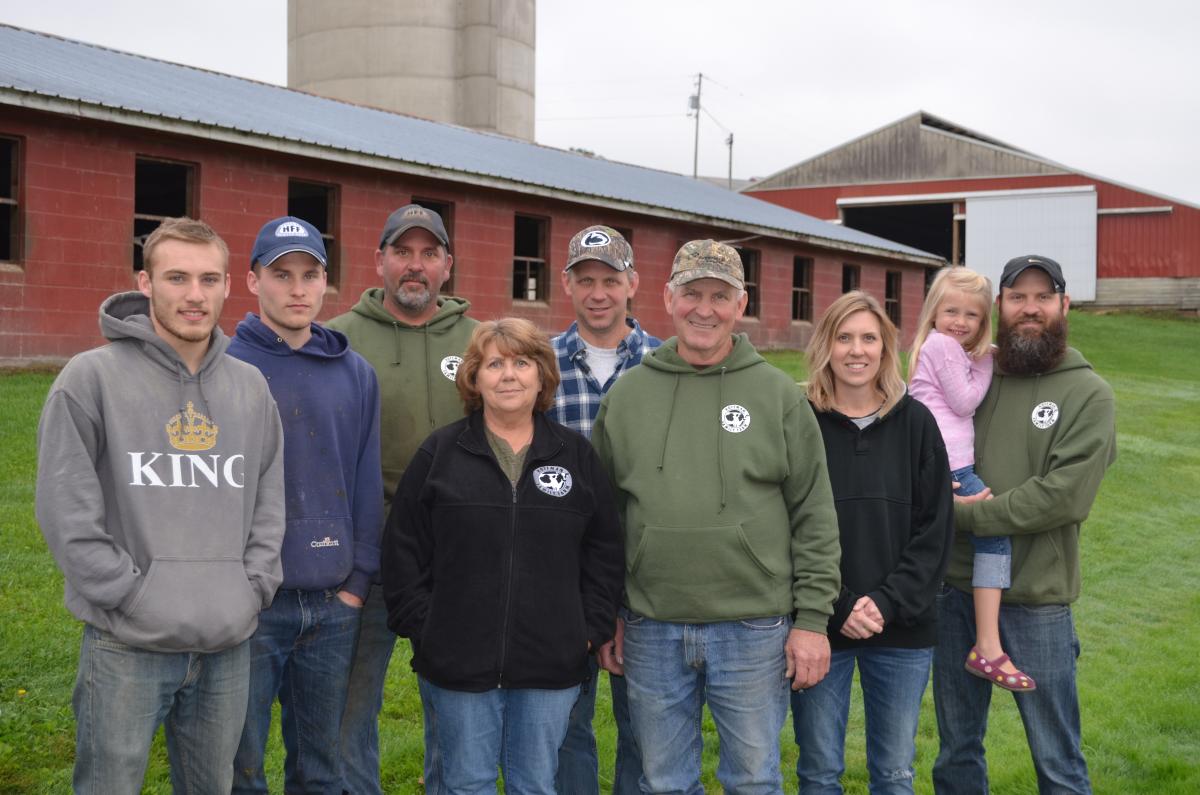
One FARM Program family recently received recognition for their work in stockmanship. Dale and Carol Hoffman were awarded the 2017 National Beef Quality Assurance Award in March. The award is given to outstanding members of the beef industry in five categories: Cow-Calf, Feedyard, Dairy, Marketer and Educator

The Hoffmans (pictured right) are members of Land O’ Lakes, Inc., and hail from Pennsylvania. Their farm began in 1976 with just 40 cows and 400 acres, but has since expanded to include 800 milking cows.

CWT Assists Members in Capturing 12.5 Million Pounds of Dairy Export Sales in March

Cooperatives Working Together assisted member cooperatives in securing 78 contracts in March to sell 12.53 million pounds of cheese and 52,360 pounds of butter to customers in Asia, Central America, the Middle East, North Africa and Oceania. The product will be shipped from March through June 2017.

The addition of these transactions to the CWT-assisted sales made in January and February raised the total number of CWT sales to 23.49 million pounds of cheese and 1.43 million pounds of butter. In total, these sales to customers in 12 countries on five continents will move the equivalent of 248.94 million pounds of milk on a milkfat basis overseas in the first six months of 2017.

Helping CWT member cooperatives gain and maintain world market share through the Export Assistance program in the long-term expands the demand for U.S. dairy products and the U.S. farm milk that produces them. This, in turn, positively affects all U.S. dairy farmers by strengthening and maintaining the value of dairy products that directly impact their milk price.

The amounts of dairy products and related milk volumes reflect current contracts for delivery, not completed export volumes. CWT will pay export assistance to the bidders only when export and delivery of the product is verified by submission of the required documentation.

All cooperatives and dairy farmers are encouraged to add their support to this important program. Membership forms are available on the CWT website.