NMPF Statement on Passage of Farm Bill by House and Senate

From Jim Mulhern, President and Chief Executive Officer, NMPF:

“It has been a long and torturous road toward the creation of a better safety net for dairy farmers, but with today’s vote in the Senate to approve the farm bill, coupled with last week’s House vote, that five-year journey has reached its end.

“We didn’t wind up precisely where we wanted in terms of the dairy program, but the milk glass is more than half-full. The new farm bill replaces three outmoded programs intended to help farmers – but that often failed in that effort. In their place is a new, more modern, and more comprehensive margin protection program offering dairy producers a far better and more effective safety net. Because it is designed to protect against periods of both low milk prices as well as high feed costs, margin insurance is a better risk management tool to help farmers deal with the global volatility in commodity prices in the 21st century.

“On behalf of our dairy farmer members, I want to thank the farm bill conference committee principals – Sens. Debbie Stabenow and Thad Cochran, and Reps. Frank Lucas and Collin Peterson – as well as Sen. Patrick Leahy, for all of their enormous efforts, and those of their staffs, to fashion this new dairy policy.

“I also want to express my appreciation to all of the farmers, cooperatives, and farm organizations that have helped throughout this long process. The members of NMPF have worked tirelessly since 2009 to build a new and better dairy program. The farm bill’s margin protection program is a tribute to their dedication and commitment.”


The National Milk Producers Federation, based in Arlington, VA, develops and carries out policies that advance the well-being of dairy producers and the cooperatives they own. The members of NMPF’s cooperatives produce the majority of the U.S. milk supply, making NMPF the voice of more than 32,000 dairy producers on Capitol Hill and with government agencies.
Maryland House of Delegates Urged to Oppose Bill Legalizing Sale of Raw Milk

ANNAPOLIS, MD – At a hearing here today before the Maryland House’s Health and Government Operations Committee, the National Milk Producers Federation (NMPF) urged the state’s delegates to oppose a bill that would legalize the sale of unpasteurized milk in Maryland through the use of cow-share programs.
NMPF’s Beth Briczinski, Vice President of Dairy Foods and Nutrition, testified that unpasteurized milk, also known as raw milk, carries significant public health risks. Its consumption “is discouraged by every major health organization in the United States, including the American Medical Association and the American Academy of Pediatrics, as well as federal health agencies like the Food and Drug Administration,” Briczinski said.

“We pasteurize milk for a reason,” Briczinski said. “The link between raw milk and foodborne illness has been well-documented, with evidence spanning nearly 100 years. Raw milk is a key vehicle in the transmission of human pathogens including E. coli, Campylobacter, Listeria, and Salmonella. The state should not create new opportunities for these bacteria to make people sick.”

While it may be one thing for adults to make the decision to consume raw milk, the product is particularly dangerous for children, who are unable to understand the risks presented to their health. Briczinski noted that “nearly two-thirds of all outbreaks associated with raw-milk or raw-milk products involve children.”

Briczinski also addressed the misinformation and supposed health benefits of raw milk that are often touted by advocates and the media.

“No claim related to the purported health benefits of raw milk has been substantiated in any of the medical literature,” she explained. “The only scientific consensus is that raw milk can cause serious illnesses and hospitalizations, and can result in life-long negative health complications and death.”

Currently, 30 states allow the legal distribution of unpasteurized milk, which is also where nearly 75% of the raw milk-associated outbreaks have occurred. Americans have become ill after consuming raw milk from numerous sources, including cow-share programs and raw milk producers who are licensed, permitted, or certified.


The National Milk Producers Federation (NMPF), based in Arlington, VA, develops and carries out policies that advance the well-being of dairy producers and the cooperatives they own. The members of NMPF’s cooperatives produce the majority of the U.S. milk supply, making NMPF the voice of more than 32,000 dairy producers on Capitol Hill and with government agencies.

NMPF Statement on Completion of Farm Bill Dairy Title

From Jim Mulhern, President and Chief Executive Officer, NMPF:

“Over the past week, NMPF has worked with agriculture leaders in the House and Senate to develop a margin insurance program that will offer dairy farmers an effective safety net in the absence of the market stabilization component featured in our original program.

“That process is now complete. Despite its limitations, we believe the revised program will help address the volatility in farmers’ milk prices, as well as feed costs, and provide appropriate signals to help address supply and demand.

“The program that we have worked to develop establishes a reasonable and responsible national risk management tool that will give farmers the opportunity to insure against catastrophic economic conditions, when milk prices drop, feed prices soar, or the combination. By limiting how much future milk production growth can be insured, the measure creates a disincentive to produce excess milk. The mechanism used is not what we would have preferred, but it will be better than just a stand-alone margin insurance program that lacks any means to disincentivize more milk production during periods of over-supply.

“Importantly, the program doesn’t discriminate against farms of differing sizes, or preferentially treat those in differing regions.

“The revised bill also establishes a system for the U.S. Department of Agriculture (USDA) purchase consumer-packaged dairy products during low-margin periods, which will stimulate demand and help dairy farmers when they need it most, and only then.

“We thank the principals of the House-Senate agriculture conference committee for working hard in an attempt to address the needs of dairy producers in this measure. We look forward to the passage of the overall farm bill, and will work diligently with the USDA to ensure the resulting dairy program is as effective and farmer-friendly as possible.”


The National Milk Producers Federation, based in Arlington, VA, develops and carries out policies that advance the well-being of dairy producers and the cooperatives they own. The members of NMPF’s cooperatives produce the majority of the U.S. milk supply, making NMPF the voice of more than 32,000 dairy producers on Capitol Hill and with government agencies.

NMPF Statement on Status of Farm Bill Negotiations over Dairy Title

From Jim Mulhern, President and Chief Executive Officer, NMPF:

During the past four years that NMPF has worked to revise federal dairy policy, we have evaluated a variety of proposals against two key criteria: 1) does it provide an effective safety net for all of the nation’s dairy farmers?; and 2) does it protect taxpayers from the possibility of excessive program costs through the use of suitable incentives for those enrolled in the program?

The resulting Dairy Security Act measure, contained in the farm bills approved by the House and Senate Agriculture Committees in 2012 and again in 2013, is a loss-prevention margin insurance program that meets those objectives.

We were initially heartened that the four bi-partisan leaders of the House-Senate farm bill conference committee included the DSA language in the package that they were planning to present to the full conference. Despite the long-standing opposition to this plan from House Speaker John Boehner, we were confident we had the votes in the conference committee to defeat any amendment to strike the market stabilization program.

Unfortunately, the Speaker’s threat that he would not allow a vote on a farm bill containing the market stabilization program has effectively served to kill our proposal within the committee.

We are now engaged in discussions with agriculture committee staff on an alternative approach to creating a dairy safety net that would contain inducements to help achieve a supply-demand balance and prevent catastrophic milk price collapses like we experienced in 2009.

At this point, it is conceivable that an alternative mechanism could be developed, relying upon adjustments to the program’s margin insurance payout structure and participant premium rates, among other options. Any such approach must still offer an effective risk management tool to farmers, while containing suitable incentives to program enrollees to achieve cost controls. As always, the devil is in the details, and we will not support any program that does not effectively address the needs of our members throughout the U.S.


The National Milk Producers Federation, based in Arlington, VA, develops and carries out policies that advance the well-being of dairy producers and the cooperatives they own. The members of NMPF’s cooperatives produce the majority of the U.S. milk supply, making NMPF the voice of more than 32,000 dairy producers on Capitol Hill and with government agencies.

NMPF Urges Continued Focus on Lack of Dairy in the American Diet

ARLINGTON, VA – The National Milk Producers Federation (NMPF) today urged a scientific advisory panel working on the next round of federal dietary advice to keep the recommendation of three daily servings of dairy products for most Americans, since dairy products are the number-one source of nine key nutrients.

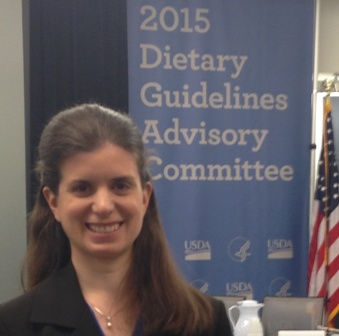
“Dairy foods are uniquely nutrient-rich and virtually irreplaceable in the diet if we want to meet nutrient recommendations,” said NMPF Vice President for Dairy Foods & Nutrition Beth Briczinski (left). “We strongly urge the committee to maintain the current recommendation of three daily servings of dairy, and to focus on the serious public health problem of under-consumption of milk and dairy products.”

Briczinski reminded the group that milk, cheese, and yogurt contribute more than half the calcium and vitamin D in the American diet, and are the primary source of seven other essential nutrients in children’s diets: phosphorus, magnesium, potassium, vitamins A, B12, D, and riboflavin. In fact, the 2010 Dietary Guidelines Advisory Committee (DGAC) found that when foods from the milk group were removed from model food patterns, intakes of calcium, vitamin D, and three other important nutrients fell below the goals.

“Even if calcium levels can be maintained with alternative foods, the levels of other nutrients such as protein, potassium, and vitamin D are adversely affected – there is simply no substitute for dairy,” she said. “Americans have major shortfalls in recommended milk consumption starting at four years of age. None of us should find that acceptable.”

Research published since 2010 has strengthened the case for dairy’s beneficial role in reducing the risk of several chronic diseases, according to Briczinski. “The good news is that if people who under-consume dairy would add even one serving a day, that would bring average daily intakes of Americans much closer to meeting Dietary Guideline recommendations. We hope this committee will encourage people who are under-consuming dairy to add that extra serving.”

Briczinski cited recent research indicating dairy is an inexpensive way of providing these nutrients, and that since the last round of federal nutrition advice, the case has been strengthened that dairy is beneficial in reducing the risk of several chronic diseases.

“Many population groups do not consume anywhere near the recommended amounts of dairy,” she said. “The good news is that if people who under-consume dairy would add even one serving a day, that would bring average daily intakes … much close to meeting Dietary Guideline recommendations.”

Briczinski was speaking at the second of two days of public hearings of the DGAC for the 2015 edition of the federal government’s basic consumer diet advice, the Dietary Guidelines for Americans. The dietary guidelines are issued jointly by the departments of agriculture and health and human services every five years. The hearings were held in Bethesda, Maryland, outside Washington.


The National Milk Producers Federation (NMPF), based in Arlington, VA, develops and carries out policies that advance the well-being of dairy producers and the cooperatives they own. The members of NMPF’s cooperatives produce the majority of the U.S. milk supply, making NMPF the voice of more than 32,000 dairy producers on Capitol Hill and with government agencies.

Farm Bill Negotiations Still Continuing As 2014 Begins

Congress is still wrangling over the contents of a new farm bill proposal, and the timing of final passage of the legislation is likely to slip later into January as NMPF and other supporters of the Dairy Security Act fight to keep that policy measure in the final bill.
A House-Senate conference committee was expected to formally unveil the details of a compromise farm bill this past week, but disputes over dairy policy, payment limitations, catfish inspections, and state egg production standards all combined to slow the process down. Reports are that the long-standing dispute over food stamps will be settled by adjusting eligibility requirements that will reduce program spending approximately $9 billion over 10 years – less than the House’s suggested cut of $40 billion, but higher than the Senate’s proposed cut of $4 billion.

The farm bill conference’s four leaders had agreed to include in the final bill the dairy proposal that both the House and Senate agriculture committees approved last year. That proposal – essentially, the Dairy Security Act backed by NMPF – establishes a new safety net for dairy farmers containing a margin insurance program, combined with a market stabilization mechanism to protect both farmers and taxpayers. However, House Speaker John Boehner has reiterated his concerns about market stabilization, clouding the prospects of the farm bill package.

“The stabilization program is designed to both reduce the duration of low margin conditions, and reduce costs,” said NMPF President and CEO Jim Mulhern. “Without it, margin insurance alone could be a budget-buster – and a program Congress should reject. We firmly believe that the contents of the dairy title should be based on what is the best policy for the future, not on desperate threats and last-minute politics.”

NMPF last month circulated a Congressional Research Service analysis of the competing House and Senate dairy plans, which showed the Senate language, with the market stabilization component, will cost $100 million less over 10 years than the House program.

Until a final bill is approved, many farm programs, including the dairy program, are technically operating under farm laws dating to 1949 and 1938. But Agriculture Secretary Tom Vilsack said in December there would be no immediate impact, since he will delay efforts to draft the rules putting the 65-year-old law into effect, as long as it appears a new farm bill is imminent. However, as high-level farm bill negotiations continue, the specter of a return to permanent law remains on the horizon.

Mulhern noted that concerns about the market stabilization program ought to be put into perspective by the potential impact of much, much higher levels of government intervention in the market, due to a return to 1949 levels of parity pricing, “which could nearly double consumer milk prices. That prospect should be a really big concern to everyone. That’s the issue at stake in what happens next,” he said.

Immigration Reform Returns to Center Stage as Congress Returns from Recess

Immigration reform also will be in the spotlight as Congress returns for the second session of the 113th Congress. After numerous bills, including an agriculture-specific bill, stalled in the House at the end of 2013, prospects for action in 2014 received a strong boost when House Speaker John Boehner began signaling supporters of immigration reform that he would push for action on legislation this year. While the timing of that process remains unclear, the signals sent by Speaker Boehner are a marked improvement from even a few months ago.

Unlike the Senate, which passed a comprehensive reform measure, the House will pursue a piecemeal approach centered on a series of bills passed last year by the House Judiciary Committee. One of those measures, the Agriculture Guestworker Act (H. R. 1773), was created specifically to deal with the challenges of using immigrant labor in the agricultural sector. While this legislation includes important reforms that would benefit agriculture – and specifically dairy farms – improvements will be needed to ensure that this measure fully addresses the number one concern for the dairy industry: maintaining farmers’ current workforce.

NMPF has been deeply engaged in efforts to revise our nation’s immigration system through its work with the Agriculture Workforce Coalition (AWC), a coalition of more than 70 agriculture organizations dedicated to reforming our nation’s immigration laws for the benefit of producers and growers. NMPF will continue to work with the AWC and members of Congress to ensure that any legislation that is passed by the House fully addresses the needs of dairy farmers.

2013 CWT’s Biggest-Ever Export Year

Cooperatives Working Together (CWT) had its biggest year in 2013, with American-type cheese export sales topping 127 million pounds, and butter exports approaching 90 million pounds. The product is going to 40 countries on six continents.

CWT-assisted cheese sales rose 5.4 million pounds (4.4%) over 2012’s level, to 127.9 million pounds. The primary type of cheese sold was cheddar at 76%; however, the percentage of export sales that was Gouda reached 5% in 2013, up from just 2% in 2012. Monterey Jack exports through CWT reached 19% last year, up from 13% in 2012.

The majority of cheese sales were in Asia, with Japan the largest buyer. North Africa accounted for 25% of sales, with the lion’s share being sold in Egypt. Sales to countries in the Middle East accounted for 12% of sales.

CWT-assisted butter sales (at 82% fat content) reached 97.2 million pounds in 2013, up 16.1 million pounds (22%) from the sales level reached in 2012. The Middle East bought 53% of the 2013 CWT-assisted butter sales, with Saudi Arabia accounting for 40% of the sales in the Middle East, followed by Iran at 21%.

Through October of 2013, shipments of CWT-assisted sales represented 19% of total U.S. cheese exports, and 82% of all American-type cheese exports. For butter, the 80.5 million pounds of shipments sold with CWT export assistance is equal to 57% of all butter exported in the first 10 months of 2013.

Thanks to the continuing investment of the dairy farmer members of 38 cooperatives in 2014 and 2015, CWT will be able to provide export assistance when needed to cooperative members that are expanding the market for U.S. American-type cheeses, butter and whole milk powder in key foreign markets.

NMPF Ties in National Football League Playoffs with REAL® Seal Efforts

Just in time for the playoffs, NMPF is out with a video reminding the public that “real dairy products and football are a great team.” The 26-second YouTube video features DairyUS, the newly created, animated version of the REAL® Seal logo. The video highlights the fact that nachos, dips, and pizza—all made with real cheese—are a great complement to watching football.

NMPF took over management of the REAL® Seal in 2012 and has been promoting the seal heavily on the internet and in social media in recent months. In February, these efforts will focus on Valentine’s Day, and in March they will leverage March Madness and St. Patrick’s Day.

American Butter Institute Takes New Direction in 2014

The American Butter Institute (ABI), managed by NMPF, has unveiled a new logo for the association, one of the many recent changes at the 106-year-old organization.

“As a result of the changes made through our strategic planning process, it was determined that ABI needed to revitalize and revamp its logo to bring it more into the 21st century. The ABI board voted on the new logo at its October meeting, and we are launching it this week,” said Anuja Miner, the Executive Director of ABI.

In addition to approving a new logo, the ABI Board last autumn named Miner the organization’s Executive Director. She takes over as the chief ABI staff person from Jerry Kozak, who has retired from the dairy industry after running ABI for the previous 22 years.

ABI also reported this week that U.S. butter consumption in 2013 reached its highest level in 40 years. Miner attributed the increase in part to a shift in consumer preferences away from highly processed foods, artificial ingredients, and trans fats derived from partially hydrogenated vegetable oils. Recently, the U.S. Food and Drug Administration began the process of banning trans fats from the American food supply.

“Margarine and other spreads are no longer viewed as healthier alternatives,” she noted, as consumers are demanding more pure and natural products. Since 2002, Americans increased their butter intake by 25 percent. In 2012, per capita consumption reached 5.6 pounds a year, up from a low point of 4.1 pounds in 1997.

Negotiations Continue on U.S. Trade Agreements

December was an intensive month for trade negotiations of importance to U.S. dairy farmers. Heated negotiations in both the Trans-Pacific Partnership (TPP) and the Transatlantic Trade and Investment Partnership (TTIP) dominated last month.

In early December, NMPF staff traveled to Singapore for a TPP Ministerial meeting at which the 12 TPP countries sought to make significant progress on many of the issues that remain unresolved in the negotiations. Market access was one notable topic of focus – particularly as it relates to Japan and Canada. NMPF joined with several other U.S. agricultural organizations in sending two letters to the Obama Administration about the critical importance of securing access into Japan and Canada. The letters are available here and here.

Also last month, the U.S. and European Union (EU) officials continued to negotiate TTIP provisions. NMPF gave a presentation at the stakeholder session focused on the core parameters dairy farmers need to see in this agreement in order to address the $1 billion dairy trade deficit the U.S. would like to close with members of the EU.

Staff stressed that this imbalance is the result of overly-restrictive EU rules that impose unscientific and onerous requirements on imports from the U.S., as well as other barriers to trade such as banning the use of many common product names. The EU has made clear that one of its key goals for TTIP is to extend these product naming barriers to the U.S. market as well. NMPF is vehemently opposed to any such restrictions on the names U.S. companies can use – whether in the U.S. market, overseas, or in the EU itself.